What Is BIM and Why Does It Matter?
The construction and engineering industry is undergoing one of its biggest digital transformations. At the center of this evolution is Building Information Modeling (BIM)—a methodology that is changing how buildings, infrastructure, and industrial facilities are designed, built, and managed.
Although many people associate BIM with software like Autodesk Revit, BIM is much more than a modeling tool. It is a collaborative process that enables architects, engineers, contractors, and owners to work with a shared source of accurate digital information throughout the entire lifecycle of a project.
What Is BIM?
Building Information Modeling (BIM) is the process of creating and managing intelligent digital models that represent the physical and functional characteristics of a built asset.
Unlike traditional CAD drawings, BIM models contain not only geometry but also valuable information such as:
- Materials
- Dimensions
- Structural properties
- Mechanical and electrical systems
- Costs
- Quantities
- Maintenance information
- Construction phases
In other words, BIM combines 3D visualization with structured data that can be used throughout design, construction, operation, and maintenance.
BIM Is More Than 3D Modeling
One of the most common misconceptions is that BIM is simply 3D modeling.
A BIM model is actually a digital database of the project.
Every wall, door, pipe, beam, or electrical panel contains information that can be analyzed, scheduled, quantified, coordinated, and maintained.
This digital approach allows project teams to identify conflicts before construction begins, reducing costly errors on site.
Key Benefits of BIM
Organizations around the world are adopting BIM because it helps improve efficiency throughout the project lifecycle.
Some of the main benefits include:
- Better collaboration between disciplines
- Reduced design conflicts
- Improved project coordination
- More accurate quantity takeoffs
- Better cost estimation
- Construction planning (4D)
- Cost management (5D)
- Facility management after construction
- Increased productivity
- Better decision making through data
For many organizations, BIM is no longer optional—it has become a competitive advantage.
BIM Across Different Industries
Although BIM is often associated with architecture, its applications extend far beyond buildings.
Today, BIM methodologies are used in:
- Commercial and residential construction
- Infrastructure projects
- Bridges and highways
- Airports
- Railways
- Industrial plants
- Manufacturing facilities
- Energy projects
- Water treatment plants
- Hospitals
- Universities
- Digital facility management
As digital engineering continues to evolve, BIM is becoming an essential component of modern project delivery.
Open BIM and IFC
One of the most important concepts in today’s BIM ecosystem is Open BIM.
Open BIM promotes collaboration using open standards instead of relying on a single software vendor.
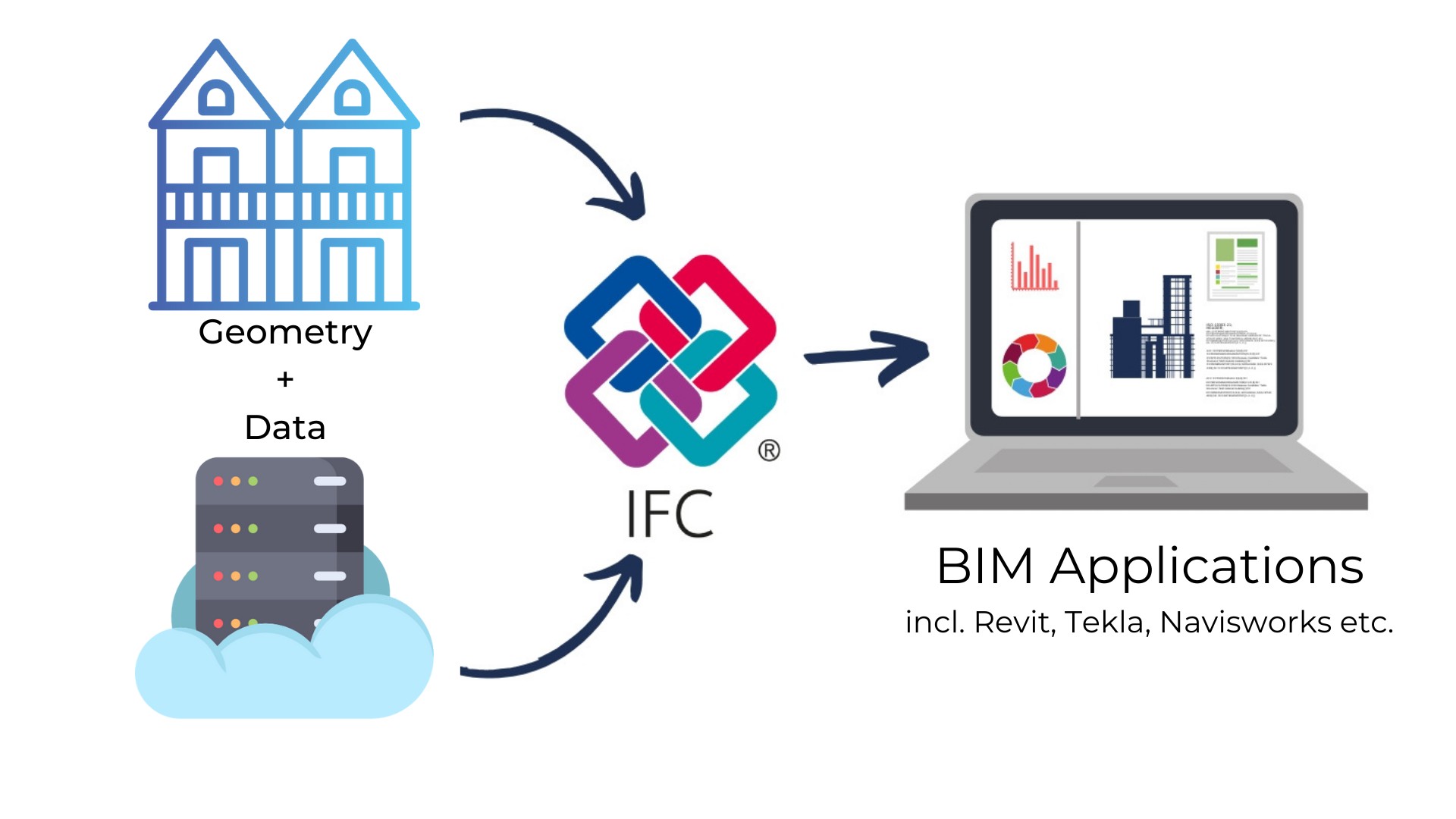
A key part of this approach is the Industry Foundation Classes (IFC) format, an open standard that allows different BIM applications to exchange project information while preserving valuable data.
This interoperability helps organizations reduce vendor lock-in and enables long-term access to project information.
The Future of Digital Engineering
The future of BIM extends beyond modeling.
Technologies such as Artificial Intelligence, Digital Twins, cloud collaboration, automation, robotics, and data analytics are transforming the Architecture, Engineering, and Construction (AEC) industry.
As these technologies converge, engineering teams will increasingly rely on intelligent digital workflows that improve quality, reduce costs, and accelerate project delivery.
Final Thoughts
BIM is not just another software trend.
It represents a new way of thinking about engineering, construction, and digital collaboration.
Whether you are an architect, engineer, contractor, software developer, or technology leader, understanding BIM is becoming an increasingly valuable skill in today’s digital economy.
This article is the first in our BIM Fundamentals series, where we explore the technologies, standards, and tools shaping the future of digital engineering.
Need Guidance on Your Digital Engineering Journey?
At ExoTechHub, we help organizations explore modern engineering technologies, software development, automation, and digital transformation strategies.
Whether you are evaluating BIM adoption, developing engineering software, or exploring open technologies such as IFC and Python-based automation, we can help you identify practical opportunities and define a roadmap that aligns with your business goals.